To the best of our knowledge, Bitcoin has not been made illegal by legislation in most jurisdictions. However, some jurisdictions restrict or ban its use, and others limit the licensing of certain entities such as Bitcoin exchanges. Regulations differ significantly from country to country and continue to evolve.

Many jurisdictions have established regulatory frameworks that provide individuals and businesses with rules on how to integrate this technology with the formal, regulated financial system, and regulation continues to develop around the world.

Is Bitcoin useful for illegal activities?

Bitcoin is money, and money has always been used both for legal and illegal purposes. Cash, credit cards and current banking systems widely surpass Bitcoin in terms of their use to finance crime. Bitcoin can bring significant innovation in payment systems and the benefits of such innovation are often considered to be far beyond their potential drawbacks.

Bitcoin is designed to be a huge step forward in making money more secure and could also act as a significant protection against many forms of financial crime. For instance, bitcoins are completely impossible to counterfeit. Users are in full control of their payments and cannot receive unapproved charges such as with credit card fraud. Bitcoin transactions are irreversible and immune to fraudulent chargebacks. Bitcoin allows money to be secured against theft and loss using very strong and useful mechanisms such as backups, encryption, and multiple signatures.

Some concerns have been raised that Bitcoin could be more attractive to criminals because it can be used to make private and irreversible payments. However, these features already exist with cash and wire transfer, which are widely used and well-established. The use of Bitcoin is subject to similar regulations that are already in place inside existing financial systems, and Bitcoin is not likely to prevent criminal investigations from being conducted. In general, it is common for important breakthroughs to be perceived as being controversial before their benefits are well understood. The Internet is a good example among many others to illustrate this.

Can Bitcoin be regulated?

The Bitcoin protocol itself cannot be modified without the cooperation of nearly all its users, who choose what software they use. Attempting to assign special rights to a local authority in the rules of the global Bitcoin network is not a practical possibility. Any rich organization could choose to invest in mining hardware to control half of the computing power of the network and become able to block or reverse recent transactions. However, there is no guarantee that they could retain this power since this requires investing as much as all other miners in the world.

It is however possible to regulate the use of Bitcoin in a similar way to any other instrument. Just like the dollar, Bitcoin can be used for a wide variety of purposes, some of which can be considered legitimate or not as per each jurisdiction's laws. In this regard, Bitcoin is no different than any other tool or resource and can be subjected to different regulations in each country. Bitcoin use could also be made difficult by restrictive regulations, in which case it is hard to determine what percentage of users would keep using the technology. A government that chooses to ban Bitcoin would prevent domestic businesses and markets from developing, shifting innovation to other countries. The challenge for regulators, as always, is to develop efficient solutions while not impairing the growth of new emerging markets and businesses.

What about Bitcoin and taxes?

Bitcoin's legal status varies by jurisdiction, but tax liability often accrues regardless of the medium used. There is a wide variety of legislation in many different jurisdictions which could cause income, sales, payroll, capital gains, or some other form of tax liability to arise with Bitcoin.

What about Bitcoin and consumer protection?

Bitcoin is freeing people to transact on their own terms. Each user can send and receive payments in a similar way to cash but they can also take part in more complex contracts. Multiple signatures allow a transaction to be accepted by the network only if a certain number of a defined group of persons agree to sign the transaction. This enables dispute mediation services, which allow a third party to approve or reject a transaction in case of disagreement between the other parties without having control on their money. As opposed to cash and other payment methods, Bitcoin always leaves a public proof that a transaction did take place, which can potentially be used in a recourse against businesses with fraudulent practices.

It is also worth noting that while merchants usually depend on their public reputation to remain in business and pay their employees, they don't have access to the same level of information when dealing with new consumers. The way Bitcoin works allows both individuals and businesses to be protected against fraudulent chargebacks while giving the choice to the consumer to ask for more protection when they are not willing to trust a particular merchant.
 How to accept Bitcoin

Inform yourself

Bitcoin does not require merchants to change their habits. However, Bitcoin is different than what you know and use every day. Before you start using Bitcoin, there are a few things that you need to know in order to use it securely and avoid common pitfalls.

Processing payments

You can process payments and invoices by yourself or you can use merchant services and deposit money in your local currency or bitcoins. Most point of sales businesses use a tablet or a mobile phone to let customers pay with their mobile phones.

Accounting and taxes

Merchants often deposit and display prices in their local currency. In other cases, Bitcoin works similarly to a foreign currency. To get appropriate guidance regarding tax compliance for your own jurisdiction, you should contact a qualified accountant.

Gaining visibility

There is a growing number of users searching for ways to spend their bitcoins. You can submit your business in online directories to help them easily find you. You can also display the Bitcoin logo on your website or your brick and mortar business.


 How to use Bitcoin

Inform yourself

Bitcoin is different than what you know and use every day. Before you start using Bitcoin, there are a few things that you need to know in order to use it securely and avoid common pitfalls.

Choose your wallet

Free bitcoin wallets are available for all major operating systems and devices to serve a variety of your needs. For example, you can install an app on your mobile device for everyday use or you can have a wallet only for online payments on your computer. In any case, choosing a wallet is easy and can be done in minutes.

Get Bitcoin

You can get Bitcoin by accepting it as a payment for goods and services. There are also several ways you can buy Bitcoin.

Spend Bitcoin

There are a growing number of services and merchants accepting Bitcoin all over the world. Use Bitcoin to pay them and rate your experience to help them gain more visibility.

How to accept Bitcoin

Inform yourself

Bitcoin does not require merchants to change their habits. However, Bitcoin is different than what you know and use every day. Before you start using Bitcoin, there are a few things that you need to know in order to use it securely and avoid common pitfalls.

Processing payments

You can process payments and invoices by yourself or you can use merchant services and deposit money in your local currency or bitcoins. Most point of sales businesses use a tablet or a mobile phone to let customers pay with their mobile phones.

Accounting and taxes

Merchants often deposit and display prices in their local currency. In other cases, Bitcoin works similarly to a foreign currency. To get appropriate guidance regarding tax compliance for your own jurisdiction, you should contact a qualified accountant.

Gaining visibility

There is a growing number of users searching for ways to spend their bitcoins. You can submit your business in online directories to help them easily find you. You can also display the Bitcoin logo on your website or your brick and mortar business.


                                                How does bitcoin work?

The basics for a new user

As a new user, you can get started with Bitcoin without understanding the technical details. Once you've installed a Bitcoin wallet on your computer or mobile phone, it will generate your first Bitcoin address and you can create more whenever you need one. You can disclose your addresses to your friends so that they can pay you or vice versa. In fact, this is pretty similar to how email works, except that Bitcoin addresses should be used only once.

icon

Balances - block chain

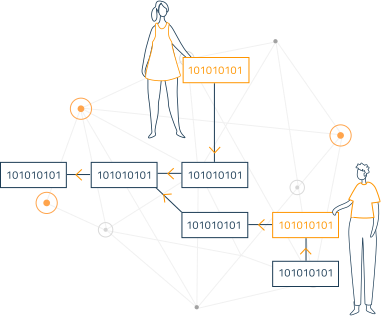
The block chain is a shared public ledger on which the entire Bitcoin network relies. All confirmed transactions are included in the block chain. It allows Bitcoin wallets to calculate their spendable balance so that new transactions can be verified thereby ensuring they're actually owned by the spender. The integrity and the chronological order of the block chain are enforced with cryptography.

icon

Transactions - private keys

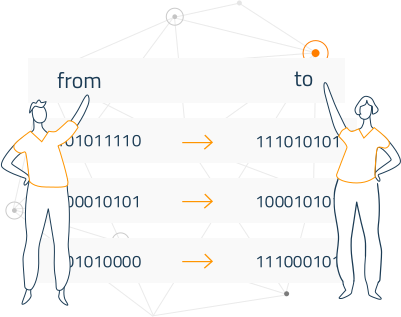
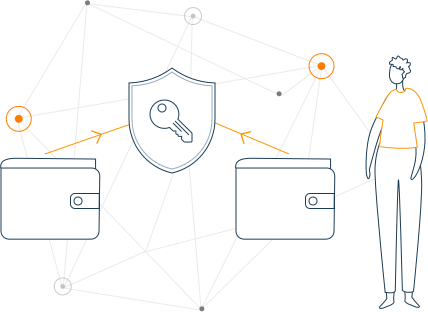
A transaction is a transfer of value between Bitcoin wallets that gets included in the block chain. Bitcoin wallets keep a secret piece of data called a private key or seed, which is used to sign transactions, providing a mathematical proof that they have come from the owner of the wallet. The signature also prevents the transaction from being altered by anybody once it has been issued. All transactions are broadcast to the network and usually begin to be confirmed within 10-20 minutes, through a process called mining.

icon

Processing - mining

Mining is a distributed consensus system that is used to confirm pending transactions by including them in the block chain. It enforces a chronological order in the block chain, protects the neutrality of the network, and allows different computers to agree on the state of the system. To be confirmed, transactions must be packed in a block that fits very strict cryptographic rules that will be verified by the network. These rules prevent previous blocks from being modified because doing so would invalidate all the subsequent blocks. Mining also creates the equivalent of a competitive lottery that prevents any individual from easily adding new blocks consecutively to the block chain. In this way, no group or individuals can control what is included in the block chain or replace parts of the block chain to roll back their own spends.

icon

Going down the rabbit hole

This is just a short summary of Bitcoin. If you want to learn more of the details, you can read the original paper that describes its design, the developer documentation, or explore the Bitcoin wiki.